The Phrases That Describe The Battle Of Britain Without Meaning To
On 15 September 1940, RAF pilots fought off the Luftwaffe's largest daylight raid over Kent and London. Three long-standing English phrases, none of them coined for the occasion, happen to describe exactly what took place that day.
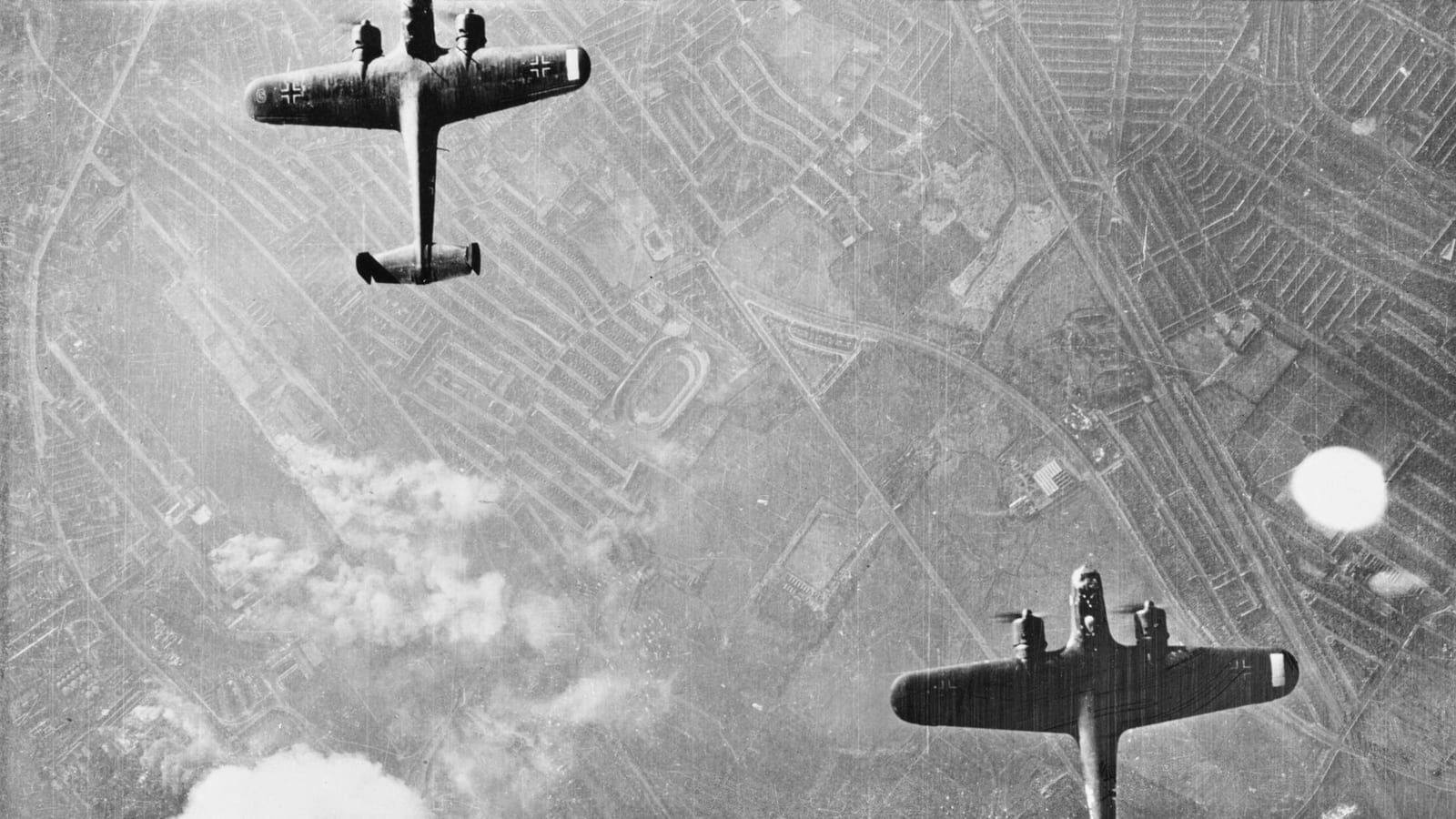
Every 15 September, Britain marks the day in 1940 when the RAF met the Luftwaffe’s largest daylight assault of the war head on over Kent and London. A Hurricane from No 229 Squadron came down at Staplehurst railway station that morning, and a Dornier bomber fell onto the forecourt of Victoria station. Four days later, Hitler postponed Operation Sea Lion indefinitely. None of the three phrases below were written for that day, but each one describes it with unsettling precision.
A Battle, And Royal With It
“Battle royal” now means any large, fiercely contested fight, and 15 September 1940 fits the description without needing much stretching: hundreds of aircraft, sustained combat across a wide stretch of southern England, and an outcome that mattered well beyond the battlefield itself. The phrase is older than any of that. Its first known appearance in print is in James Howard’s 1672 comic play All Mistaken, or the Mad Couple, long before anyone thought to attach it to cockfighting. That specific link, the image of two birds set against each other in a pit, does not turn up until more than 180 years later, in Thomas Perronet Thompson’s writing of 1857-61. By the time it reached the twentieth century the battle royal had shed the birds entirely and kept only the scale and the ferocity, which is exactly what the language needed for an air battle fought by hundreds of pilots at once.
Fighting The Good Fight, Literally
“Fight the good fight” carries a moral weight that suits how the defence of 1940 was understood at the time and has been understood since: a fight taken up because it had to be, against an invasion that never came. The phrase itself is biblical, but it was the hymn set to music by John S. B. Monsell and William Boyd in 1863 that fixed it in the popular ear. Nearly eighty years later, when Fighter Command’s pilots went up against wave after wave of Luftwaffe bombers and their escorts, the country reached, consciously or not, for language that already carried this sense of righteous necessity. Fight the good fight was never written with Spitfires in mind, but it had been sitting ready for a fight like that one for the best part of a century.
Meeting Fire With Fire
The third phrase is the most literal of the three. Shakespeare had already put the underlying idea on paper in King John in 1595, though the fixed idiom itself came later, out of a genuinely practical American practice: nineteenth-century settlers lit small, controlled “back-fires” ahead of an advancing wildfire, burning up the fuel before the real blaze could reach it. On 15 September, the RAF’s answer to the Luftwaffe’s bombers was the same principle turned into combat, meeting an aerial onslaught with the RAF’s own guns rather than any other kind of defence. Fight fire with fire began as a farmer’s tactic against grass fires and ended up describing, almost by accident, how one air force answered another.
None of these three phrases was minted for the Battle of Britain. They were already old, already settled into English, waiting in the language for an event that would make them sound freshly written. That is usually how the best-fitting phrases work: not designed for the moment, just left lying around until the moment arrives to claim them.