We Are In The Dog Days. They Have Nothing To Do With Dogs
Late July is when Britain reaches for the phrase 'dog days'. The Romans who coined it were not thinking about exhausted labradors on hot pavements.
There is a fortnight every summer when British newspapers run out of news and every third headline reaches for the same phrase. We are in it now. The dog days: the flat, heavy stretch of late July and early August when the heat sits still, nothing much happens, and the whole country seems to be waiting for something.
It is a phrase that sounds like it explains itself. Dogs lying flat on kitchen tiles. Dogs too hot to walk. Everyone a bit dog-tired. The image is so tidy that almost nobody questions it.
It is also wrong.
The star, not the animal
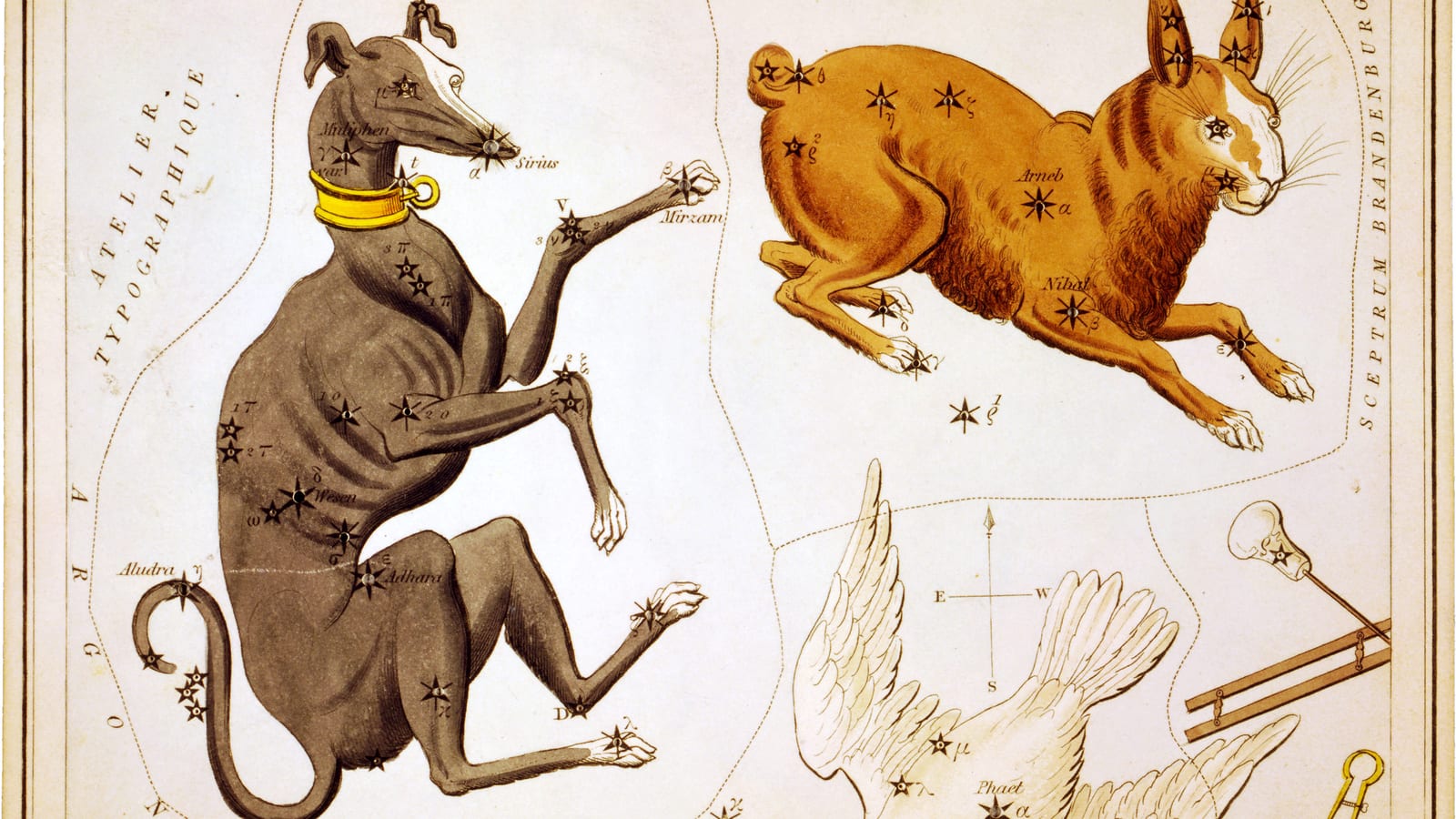
The dog in dog days is not a dog at all. It is Sirius, the Dog Star, the brightest star in the night sky and the shoulder of the constellation Canis Major, the Great Dog.
The Romans noticed that the hottest stretch of their year, late July into early August, coincided with the period when Sirius rose and set in roughly the same part of the sky as the sun. Being disinclined to treat a coincidence as a coincidence, they concluded that the star was contributing its own heat to the sun’s, and that the two together were what made the season so oppressive. The days belonged to the Dog Star, so they were the dog days.
The technical adjective survives: canicular, meaning ‘pertaining to Sirius’, which is why the same stretch of summer is sometimes called the canicular days. That is the form the phrase takes in its earliest known appearance in English, in John de Trevisa’s 1398 translation of Bartholomeus, where he writes plainly: “In the mydle of the monthe Iulius the Canicular dayes begyn.”
An idea that only works in half the world
There is a hole in the Roman theory large enough to drive a summer through. The dog days are a northern-hemisphere idea. In Australia, Argentina and South Africa, Sirius keeps company with the sun in exactly the same way in exactly the same weeks, and the result is the middle of winter.
Sirius, needless to say, contributes no measurable heat to a July afternoon in Rome or anywhere else. What the Romans had was a real pattern, an honest observation, and an explanation that happened to be entirely upside down.
The summer phrases we reach for
English has a small collection of phrases for this stretch of the year, and they carry very different attitudes to it. The dog days are something to be endured. The halcyon days, by contrast, are the golden ones we look back on, another phrase with a bird and a Greek myth hiding inside it. And for anyone temperamentally unable to sit still while the sun is out, there is the reproach that has been aimed at idlers since the sixteenth century: make hay while the sun shines.
Three phrases, one season, and a fair summary of the British relationship with warm weather: too hot, not as good as last year, and you should be doing something useful with it.